How to Open a Pathology Lab in Pakistan: Licence, Staff and Setup
A step-by-step guide to opening a clinical or pathology lab in Pakistan: the healthcare commission in each province, staff, equipment, waste and software.
Opening a pathology lab in Pakistan takes more than a room, an analyser and a sign board. Every province now expects a lab to be registered and licensed by its healthcare regulator, to have a qualified person in charge, and to meet written standards for how samples are handled and reported.
This guide walks through the steps in order. Rules change and differ by province, so always confirm the current requirements with your regulator before you sign a lease or buy equipment.
1. Know your regulator
Each province has its own body that registers and licenses healthcare establishments, labs and collection centres included:
| Where | Regulator |
|---|---|
| Punjab | Punjab Healthcare Commission (PHC) |
| Sindh | Sindh Healthcare Commission (SHCC) |
| Khyber Pakhtunkhwa | Khyber Pakhtunkhwa Health Care Commission (KP HCC) |
| Islamabad | Islamabad Healthcare Regulatory Authority (IHRA) |
| Balochistan | Balochistan Healthcare Commission (BHCC) |
In each of them the pattern is similar: you register first, then you get a licence once the lab meets the commission's minimum standards. Working without registration can lead to sealing and fines.
2. Read the minimum standards before you design the lab
Commissions publish minimum service delivery standards (MSDS) for clinical laboratories and collection centres. The Punjab commission's laboratory manual, for example, has dozens of standards and indicators, and the KP commission publishes its own standards for laboratories and collection centres.
Download the document for your province from the commission's website and read it before you choose the premises. It will tell you what inspectors look for, typically:
- separate areas for sample collection, testing and reporting;
- water, drainage, ventilation and enough power for your machines;
- written procedures (SOPs) for each test;
- quality control and machine maintenance records;
- safe storage of samples and reagents;
- how results are recorded, checked, signed and kept.
It is much cheaper to plan the rooms around these rules than to rebuild after an inspection.
3. The people
A lab is run by its people, and the commissions check their qualifications.
- A pathologist or qualified person in charge. Registered with the Pakistan Medical and Dental Council (PM&DC). Some commissions limit how many labs one pathologist can supervise; the Sindh commission's procedure, for example, allows one pathologist for up to three labs.
- Medical technologists with a recognised qualification for the bench work.
- Phlebotomy and reception staff, trained in sample collection, labelling and infection control.
Keep copies of every degree, council registration and CNIC. The registration forms ask for them.
4. Equipment and supplies
Start with the tests your area actually asks for. For most new labs that means:
- a haematology analyser (CBC);
- a chemistry analyser (sugar, LFT, RFT, lipid profile);
- a centrifuge, microscope, incubator and refrigerator;
- serology kits and urine analysis;
- a UPS or generator, because a power cut in the middle of a run wastes reagent and time.
Ask suppliers about servicing, reagent prices and what happens when a machine breaks. A cheap analyser with expensive reagents is not cheap.
5. Waste
Used needles, blood-soaked material and samples are infectious waste. Pakistan's hospital waste management rules and your commission's standards require you to separate it at source (colour-coded bins and sharps boxes) and hand it to an approved collector. Inspectors ask to see your arrangement and records.
6. Business registration and tax
Register the business itself as well: an NTN with the FBR, and a company or partnership registration if you are not a sole owner. Check your local municipal requirements for signboards and trade licences.
7. Records, reports and software
The standards expect every result to be recorded, checked and traceable to the patient and the person who did the test. You can do this on paper registers, but it gets hard quickly:
- finding a patient's old report means searching through registers;
- cash and dues are counted by hand;
- reports are typed one by one, with the risk of copying a wrong value.
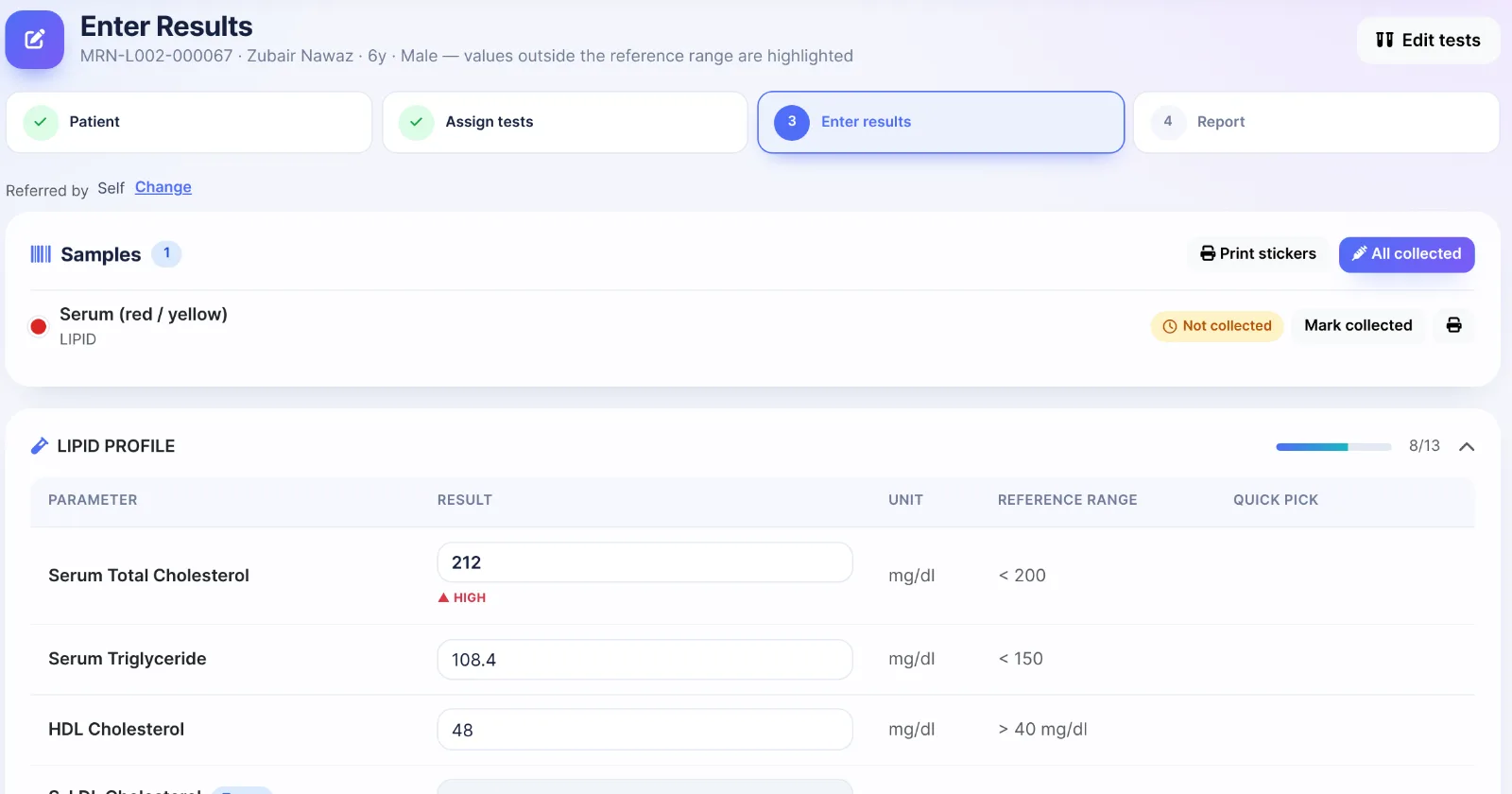
Lab software keeps the patient, the tests, the results, the person who entered them and the payment together, and prints a consistent report. Before you buy, read how to choose lab software and check what a proper lab report should include.
8. Optional: accreditation
Once the lab is running, you can aim for accreditation to ISO 15189 (medical laboratories) through the Pakistan National Accreditation Council (PNAC). It is not needed to open a lab, but it shows doctors and hospitals that your quality system has been checked independently.
A rough order of work
- Choose the area and the tests you will offer.
- Download your commission's standards for laboratories.
- Find the premises and plan the rooms to meet them.
- Hire or contract the pathologist and technologists.
- Register with the commission.
- Install equipment, write SOPs, set up waste disposal.
- Set up your test list, prices, report format and software.
- Apply for the licence and prepare for inspection.
- Open, and keep the records the standards ask for.
Setting up the software side
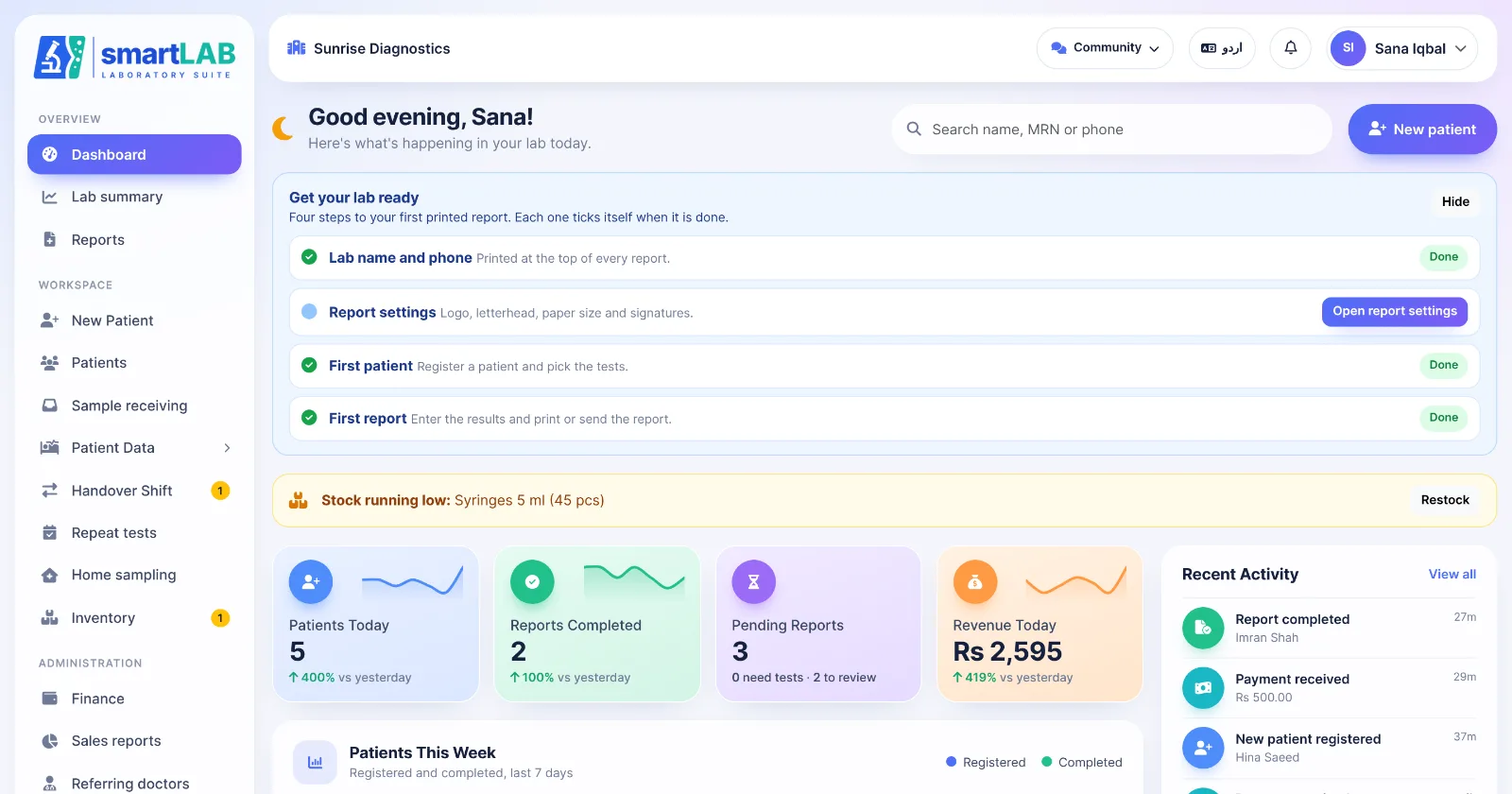
SmartLAB is lab software for Pakistani labs, and we make it. A new lab can register, set its prices and letterhead, and print its first report on the same day, with 15 days free. The pricing page has the details, and the desktop app keeps the lab working when the internet goes; see offline lab software.
This guide is general information, not legal advice. Rules and fees change; check the current requirements with your provincial commission.